What Are Inlays and Onlays?
Though traditional dental fillings are a great option for patients with minor tooth decay, what are the options for restoring a tooth with significant damage? Inlays and onlays, also known as indirect fillings, are a wonderful option of restoring a tooth with significant decay; they preserve the maximum amount of healthy tooth structure compared to a crown, and compared to a large filling they can actually strengthen the tooth!
Large fillings will actually weaken a tooth’s structure, greatly increasing the risk of the tooth breaking, cracking, and eventually requiring extensive restoration treatment such as root canal therapy. And if a good amount of healthy tooth structure is still intact, a crown would needlessly require a large amount of the tooth to be removed.
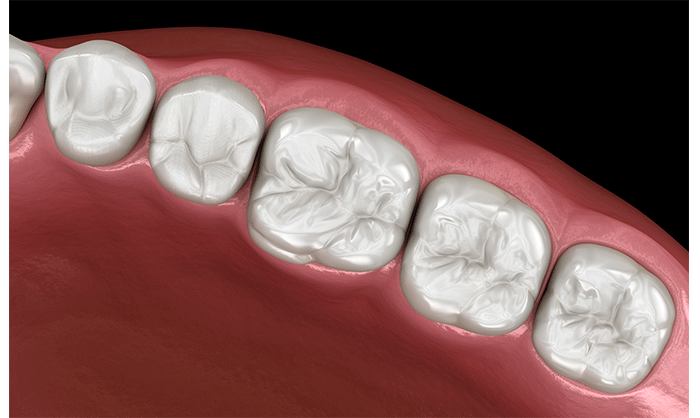
What is the difference between inlays and onlays? Simply put, inlays fit “in” the tooth while onlays fit “on” the tooth; inlays fill the space in between a tooth’s cusps (biting surfaces), while onlays, required for more extensively damaged teeth, spread over the cusps or the entire biting surface of the tooth.

The Procedure
Unlike traditional fillings which are placed in one visit, inlays and onlays typically require two visits.During the first, our dentists will take an impression of the tooth, which will be sent to a dental lab to create the inlay or onlay, and a temporary filling material will be placed on the tooth.During the second visit, the temporary filling will be removed and the custom-made indirect filling will be cemented into place, resulting in a strong, stable and natural-looking restored tooth.
Emergency Inlays & Onlays
Dental inlays and onlays are custom restorations used to repair teeth with mild to moderate damage that is too extensive for a filling but does not require a full crown. Although durable, inlays and onlays can sometimes become loose, crack, or cause discomfort, requiring prompt dental attention.
What Is an Inlay or Onlay Emergency?
An inlay or onlay emergency occurs when the restoration becomes damaged, dislodged, or causes pain or sensitivity. When this happens, the underlying tooth may be exposed to bacteria, temperature sensitivity, or further structural damage if not treated quickly.
Common Issues Requiring Emergency Inlay or Onlay Care
-
Loose or Dislodged Inlay/Onlay: The restoration may loosen due to weakened bonding, decay under the restoration, or normal wear.
-
Cracked or Chipped Restoration: Trauma, teeth grinding, or biting hard foods can damage an inlay or onlay.
-
Tooth Sensitivity or Pain: Increased sensitivity to hot, cold, or pressure may indicate exposure of the underlying tooth.
-
Inflammation or Infection: Bacteria entering beneath a compromised restoration can lead to gum irritation or infection.
What to Do If Your Inlay or Onlay Is Damaged
Assess the Situation:
- Avoid chewing on the affected side of your mouth.
- Check for sharp edges that could irritate your tongue or gums.
Temporary At-Home Care:
-
Rinse Gently: Use warm water to keep the area clean and free of debris.
-
Temporary Dental Cement: Over-the-counter dental cement may help protect the exposed tooth temporarily.
-
Orthodontic Wax: Can be used to cover rough or sharp edges.
-
Pain Relief: Over-the-counter pain relievers may help manage discomfort until you see a dentist.
These steps are temporary and should not replace professional dental care.
How Your Dentist Treats Emergency Inlays & Onlays
During your emergency visit, your dentist will evaluate both the restoration and the underlying tooth. Treatment may include:
- Re-bonding the inlay or onlay if it is intact
- Repairing or replacing the restoration if damaged
- Treating decay, infection, or structural damage beneath the restoration
Prompt treatment helps preserve the natural tooth and prevents the need for more extensive dental procedures.
Preventing Future Inlay & Onlay Emergencies
- Avoid chewing ice, hard candies, or other hard objects
- Wear a night guard if you grind your teeth
- Maintain good oral hygiene with brushing and flossing
- Schedule regular dental check-ups to monitor restorations
While inlays and onlays are designed to last for many years, addressing problems early helps ensure long-term comfort, function, and oral health.